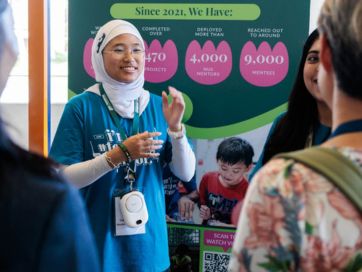

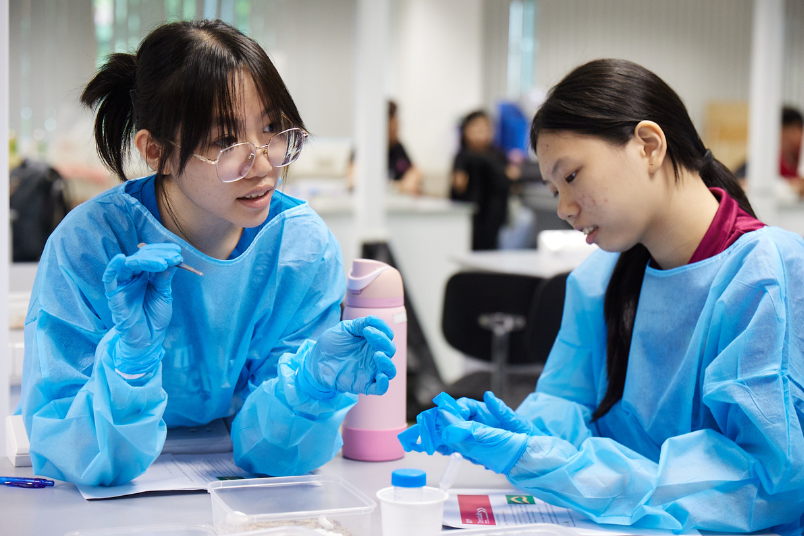
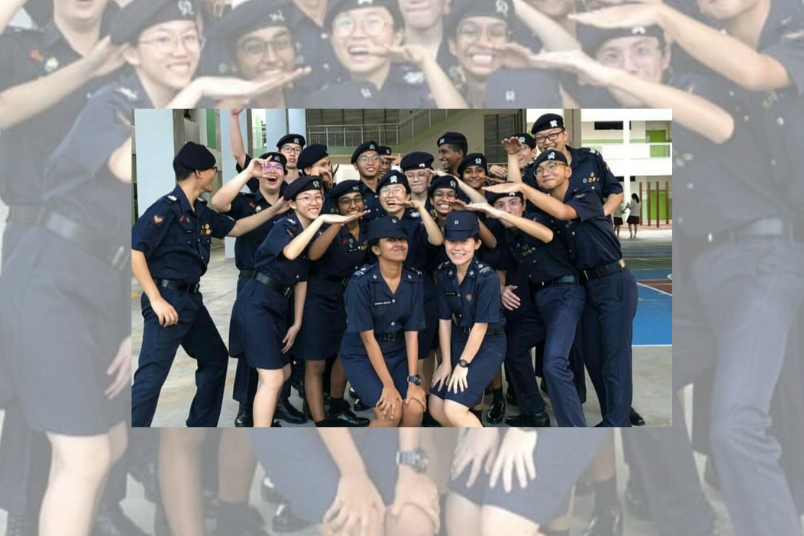
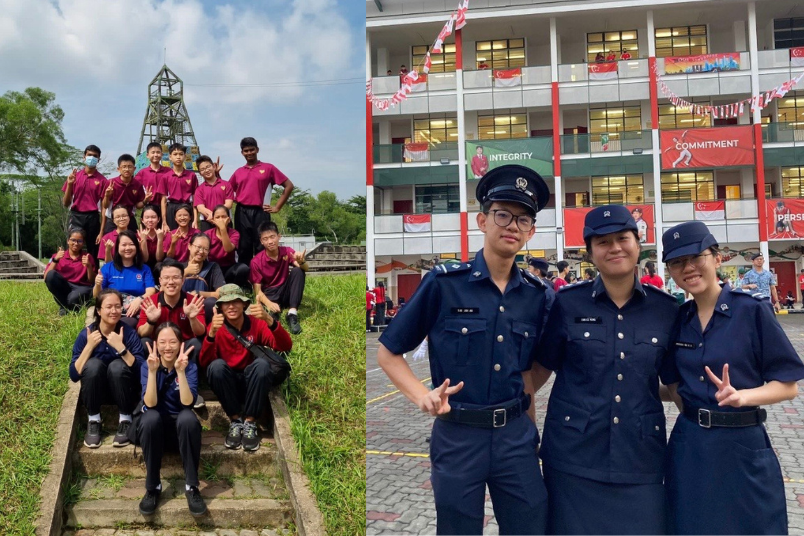
For the past six years, Faculty of Science(opens in new tab) undergraduate and Unity Secondary School alumna, Amanda Ng, has continued to return to her alma mater in various volunteer roles, driven by what she describes as a deep sense of community and responsibility. Having first served as a student leader in National Police Cadet Corps (NPCC), she began by guiding her juniors before expanding her outreach through the NUS Teach Singapore programme, where she now supports students beyond uniformed groups.
Drawing on her own journey from Unity Secondary Schol to polytechnic and later university, the experience has allowed her to connect with students who may be unsure about their future pathways and show them that further education is achievable.
Through mentoring, teaching and informal conversations, Amanda has found not only a way to give back, but also a fuller understanding of what it means to build a lasting school community.
OSA: What motivated you to keep giving back to Unity Secondary School (“Unity”) over the past six years?
Amanda: The strong sense of community at Unity motivated me to keep serving. I first began as an NPCC volunteer because I felt responsible for guiding my juniors, having previously served as Deputy Unit Commander. Over time, the relationships I built with teachers, cadets and fellow volunteers gave me a reason to stay.
I later learnt about the NUS Teach SG programme through one of my cadets, and realised I could support students beyond my role as uniformed inspector. As a Unity alumna who took the ‘polytechnic-to-university’ pathway, I felt that my experience could encourage students who may not see a straightforward route ahead or need advice on that journey.
OSA: As a Unity alumna, what does this outreach mean to you personally?
Amanda: This outreach feels like a continuation and expansion of my service. Through Teach SG and programmes like Young Educator in Science (YES)(opens in new tab), I’ve been able to connect with the wider Unity community beyond NPCC. One of the most rewarding moments is when students share good news with me, such as receiving a polytechnic admissions offer, because it shows I was a meaningful source of support.
It is also heartening when students hope to return and volunteer after graduation. To me, that is what makes the outreach meaningful. It is not only about helping students now, but also about building relationships, celebrating their growth and inspiring them to support future generations.
OSA: How has your role as a Teach SG mentor shaped the way you teach and lead?
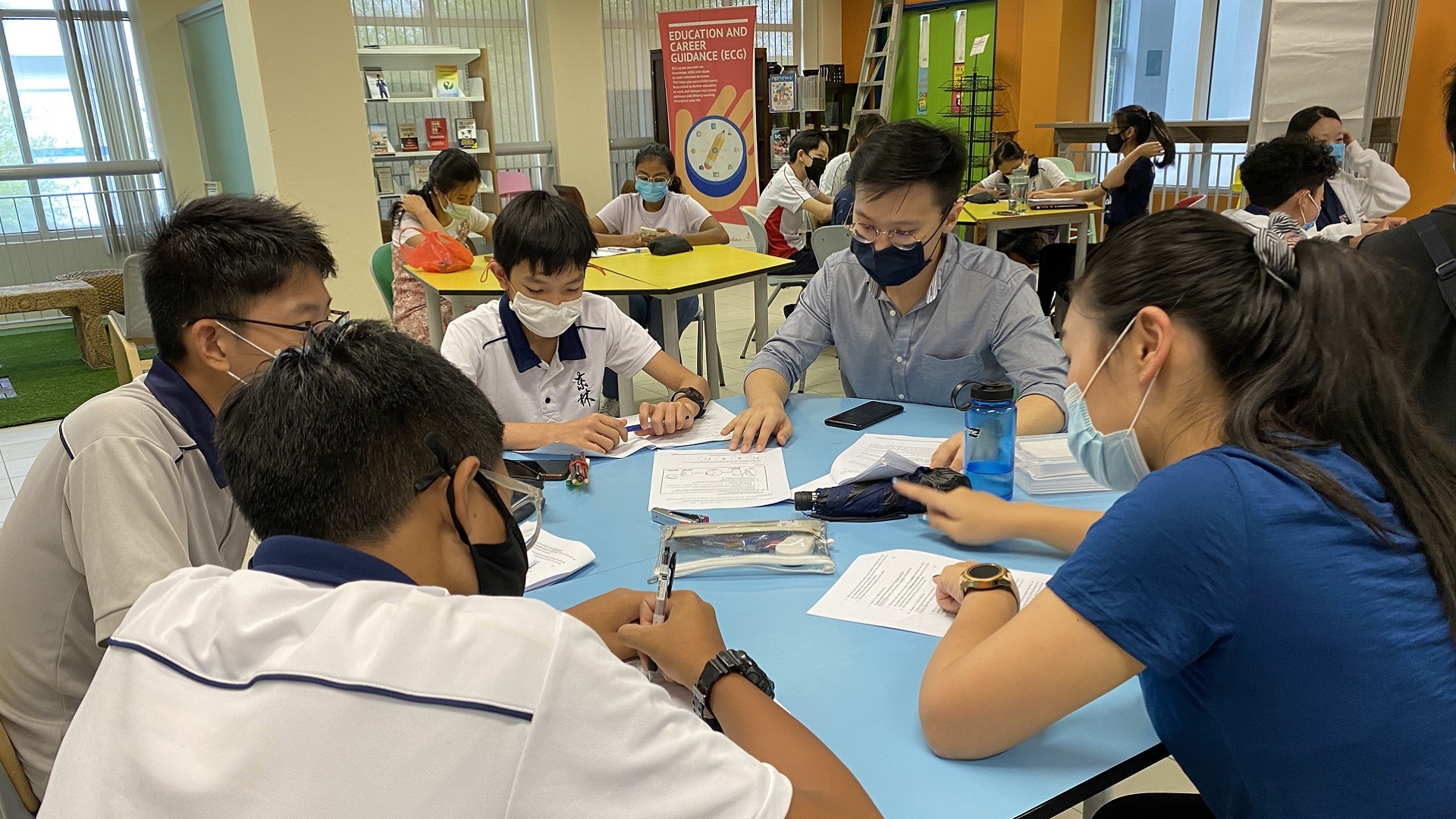
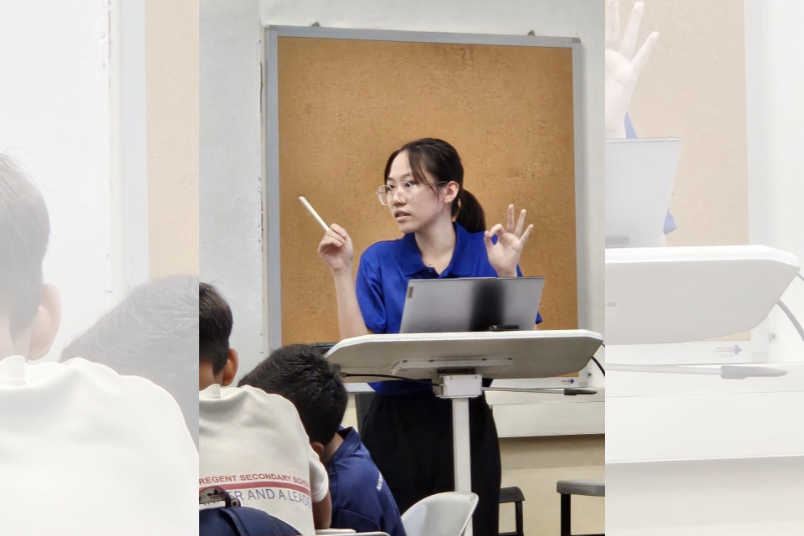
Amanda: Teach SG taught me that effective teaching is not only about knowing the academic content, but also about understanding how each student learns and what motivates them. I made my teaching more interactive by gamifying activities, simplifying difficult concepts and letting students explain their answers using their own working rather than following the model answer. When students enjoy the process, they are often more willing to participate and less afraid of making mistakes.
The experience also showed me how important it is to build rapport. Many students are more comfortable to ask questions or seek advice when interaction feels casual rather than a formal mentor-mentee setting. Building that trust has helped me throughout my mentoring journey. Teach SG has given me a meaningful platform to continuously reflect and improve the way I mentor and lead.
"When students enjoy the process, they are often more willing to participate and less afraid of making mistakes."
OSA: What was the most rewarding part of arranging the YES workshop for your Teach SG mentees?
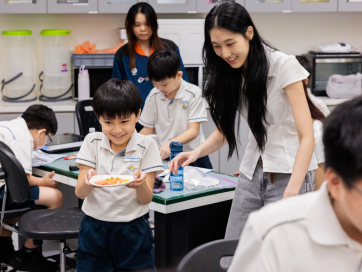
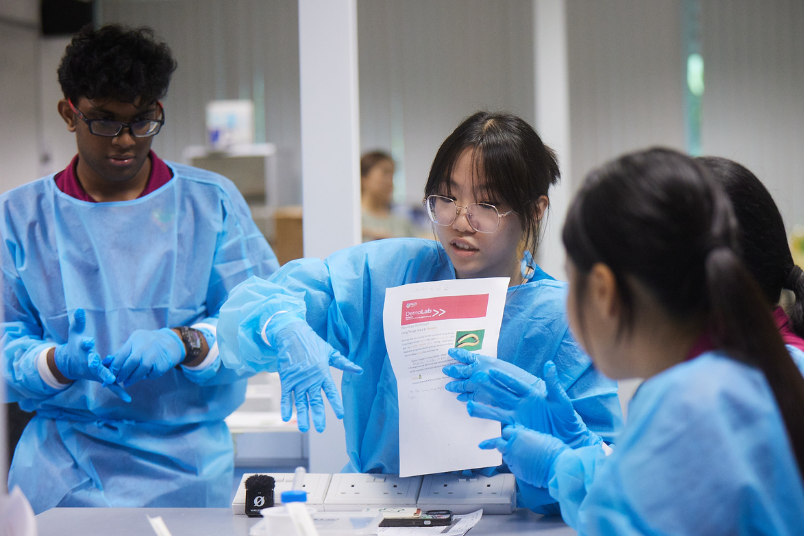
Amanda: Seeing the students gradually become more curious and willing to participate in the activities! Some of them were initially hesitant about interacting with the mealworms, but they slowly became more interested and began asking questions about the activity. I heard students say that they enjoyed themselves and did not regret joining the learning journey.
The experience also felt like a full-circle moment. It reminded me of how far I had come, while also allowing me to show them that progressing from Unity to further education is something that is possible.
OSA: What do you hope the Secondary 4 and 5 students took away from the physics and bio activities?
Amanda: Beyond the academic concepts, I hope students walked away with a renewed sense of curiosity, motivation and direction. Through the Fleming’s left-hand rule and discovering interesting facts such as how mealworms can digest Styrofoam, I wanted them to see that learning can be hands-on and enjoyable.
I hope the session showed them that there are a wider range of subjects and experiences for them to explore after secondary school. Even if they do not eventually pursue physics or biology, I hope they remain open to learning and feel that further education is something achievable and worth working towards.
OSA: What changes have you seen in yourself through years of volunteering and mentoring?
Amanda: Volunteering has made me more adaptable and confident. I used to feel uncomfortable when things did not go according to plan. I learnt to stay calm, be more flexible and adjust my approach rather than becoming frustrated by uncertainty.
I have also grown from being a quiet student into someone who can conduct briefings, speak to large groups and communicate with people from different backgrounds.
Mentoring helped me recognise that being quiet is not necessarily a weakness. It helped me become a more attentive and active listener, which allows my mentees to feel heard. By focusing on supporting others, I often find myself reflecting on my own mindset and actions, which has given me a stronger confidence in my own abilities and experiences.
OSA: What advice would you give to alumni who want to return and contribute to their alma mater?
Amanda: My advice would be to take that first step and give it a try. Help is always appreciated and you do not need to have everything figured out before returning to contribute. What matters most is being open-minded, willing to learn and prepared to show up consistently.
I would also remind alumni not to be discouraged if they do not see immediate or dramatic results from their mentorship. Sometimes, simply being present, checking in and becoming someone students can rely on is already meaningful. The impact may not always be obvious at first, but the support you provide can stay with a student for a long time.
Want to give back to your alma mater? Speak to our Teach SG volunteer managers to find your next mentoring opportunity with NUS Teach Singapore(opens in new tab), or email teachsg@nus.edu.sg to find out more.
Share:
Contributor
Office of Student Affairs