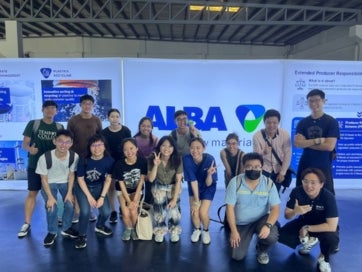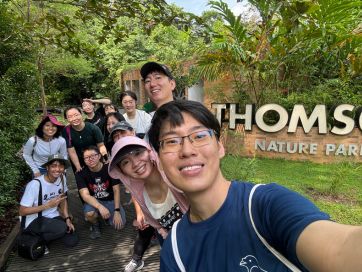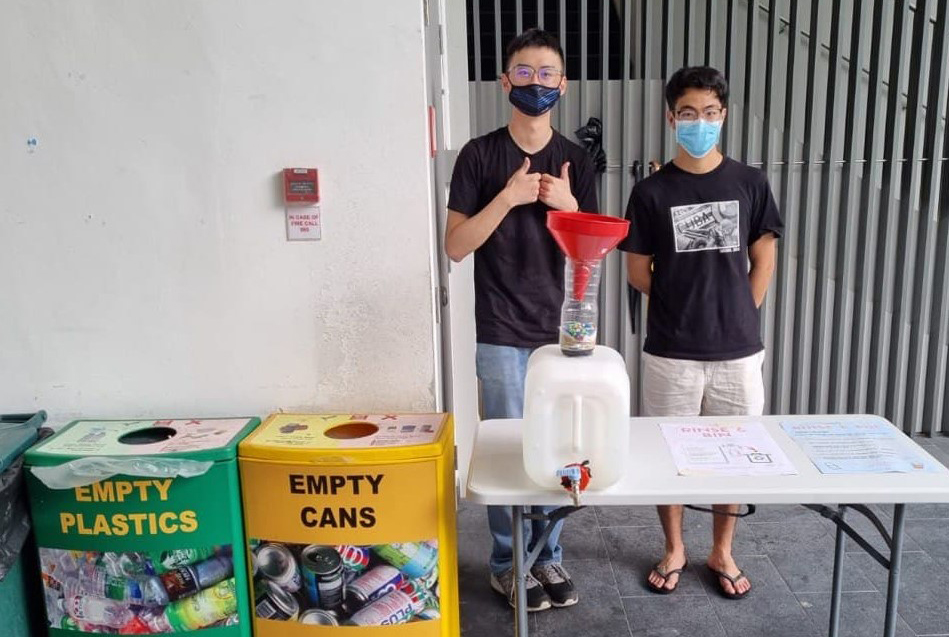

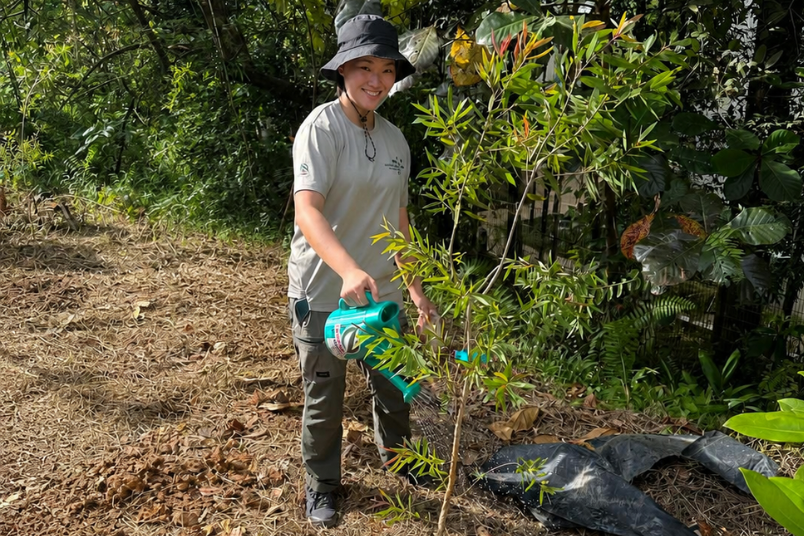
A childhood visit to the mangroves of Sungei Buloh sparked a curiosity in Lim Xin Ee (Science, Class of 2026) that never faded. What began as a fascination with nature grew into a deeper commitment to understanding the environment and the many ways it shapes our lives. As she prepares to graduate this July from NUS’ Bachelor of Environmental Studies (BES) programme, Xin Ee looks back on an undergraduate journey shaped by research, community engagement, and opportunities through the NUS Community Impact Scholarship that allowed her to deepen her involvement in sustainability efforts on campus. As part of the Class of 2026, she reflects on the experiences and interests that have shaped her time at NUS and the path she hopes to continue exploring beyond graduation.
OSA: When did you become interested in environmental studies?
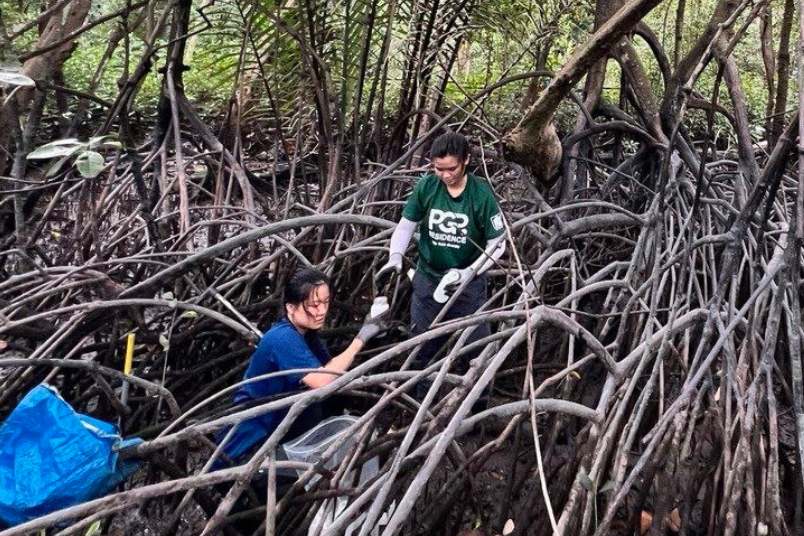
Xin Ee: I first became interested in environmental studies in primary school, when my family took me to the mangroves at Sungei Buloh. I was fascinated by how different everything looked from my usual surroundings. As a curious child, I found that many of the questions I had that day didn’t have clear answers, which made me want to keep exploring. Over time, I developed other interests, but I always found myself returning to nature, which eventually led me to study environmental studies. Even now, I’m still especially drawn to mangroves and love visiting them whenever I can.
OSA: Which area of environmental studies are you most passionate about?
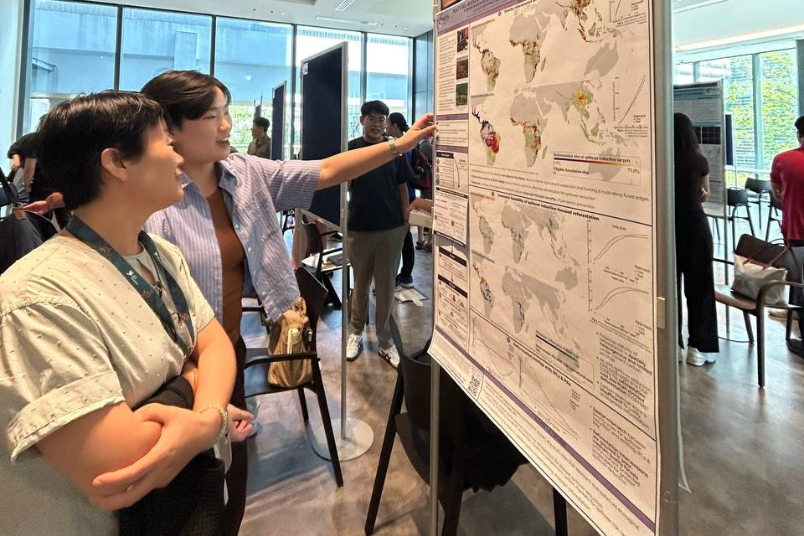
Xin Ee: I am especially interested in ecosystem services, which are the often overlooked ways the environment supports our daily lives. I’m drawn to how we can quantify these benefits to better communicate the importance of nature to wider audiences. For my final year project, I examined, on a global scale, where reforestation could help reduce the risk of diseases spreading from wildlife to humans, which is one example of how forests protect us.
OSA: Sustainability has been a hot button issue around the world for the past few years, how would you encourage non-BES students to be involved?
Xin Ee: Sustainability can feel overwhelming, so the first step is to make it feel more approachable. Activities like tree planting, for instance, do not require any prior knowledge or skills, just a willingness to show up and contribute in a small but tangible way. Over time, that first step can help build a stronger personal connection to the issue. Starting small makes it easier for people to stay engaged and gradually take on bigger roles.
OSA: You received the NUS Community Impact scholarship in 2024. Since receiving it, how have you used it to pursue your passion?
Xin Ee: I applied for the scholarship because I wanted to take my interest in environmental advocacy beyond academics and into meaningful community work. The scholarship has provided the resources to continue contributing to efforts in raising awareness on local environmental issues, through my CCA, BES Drongos. I also had the great opportunity to be a part of the OSA Sustainability Task Force in 2025, where I got to contribute to the creation of the NUS Sustainability Guide and sustainability-focused events during the Yusof Ishak House Reopening.

OSA: Tell us about the NUS sustainability guide for students.
Xin Ee: Student-led events are a major part of life at NUS, so this guide was developed to help student leaders make more sustainable choices. While sustainability resources are widely available, they can be scattered and difficult to navigate. The guide consolidates key resources, best practices, and lessons from our own event-planning experiences, providing a practical starting point for students to incorporate sustainability into their events.
OSA: The YIH Reopening event incorporated messages on sustainability. How were you involved in the programming?
Xin Ee: I had the pleasure of being involved in the YIH Reopening event through organising a tour showcasing student life and sustainability features of the building. I also got to tap onto the botanical expertise in the BES Student Committee by organising a floral press workshop during the reopening event, where students and staff got to learn about plants around NUS and got to bring home some floral souvenirs with them.

OSA: You are graduating this July, what are your post-graduation plans?
Xin Ee: I hope to continue working in environmental research and contribute to a deeper understanding of the world around us. At the same time, I am looking forward to spending more time with my family. I am also still exploring what meaningful community involvement in the environment looks like for me post-graduation, and how I can stay engaged beyond university spaces.
Share:
Contributor
Office of Student Affairs