
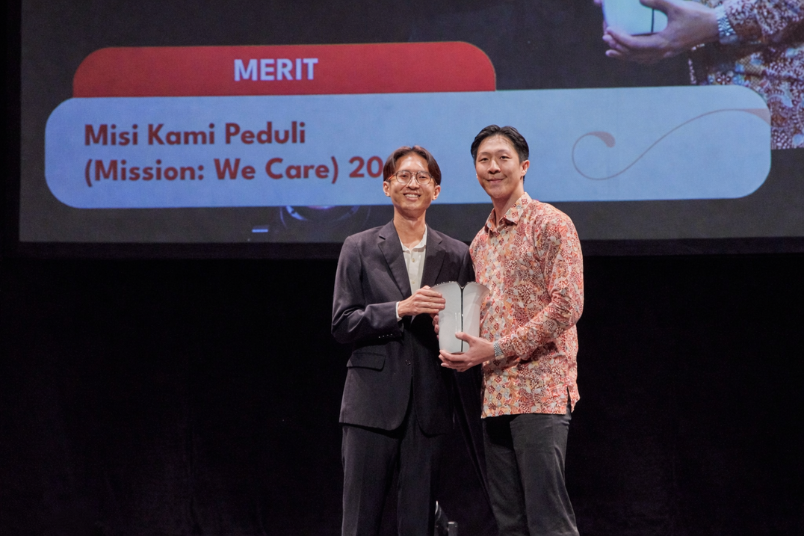
When Misi Kami Peduli received the Merit Award in the Community Service category at the NUS Achievement Awards (NAA) 2025, it marked more than a moment of recognition. A student-led initiative launched nearly 17 years ago continues, guided by a simple notion to improve education opportunities for children living in underdeveloped villages in Indonesia.
Established in 2009 by PINUS, Misi Kami Peduli (MKP), translates to ‘Mission: We Care’, was conceived as a way for Indonesian students in NUS to give back to their home country. This included working with local organisations and community stakeholders addressing education and development gaps in underprivileged villages.
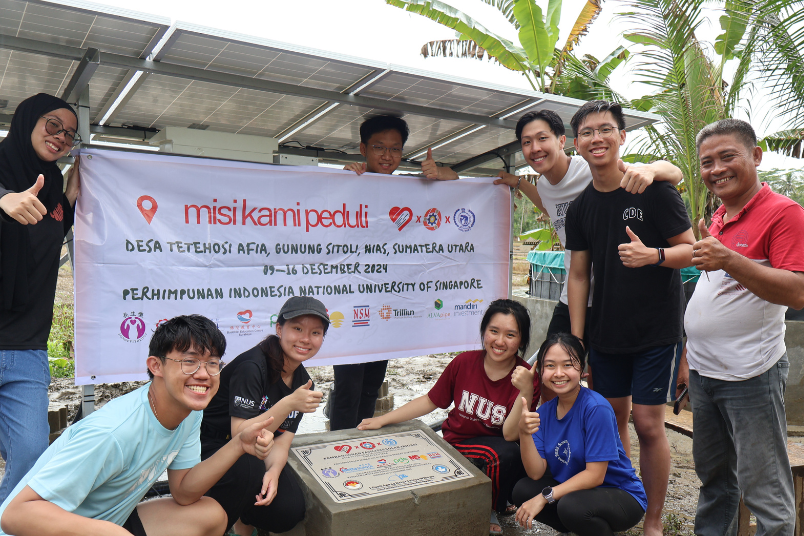
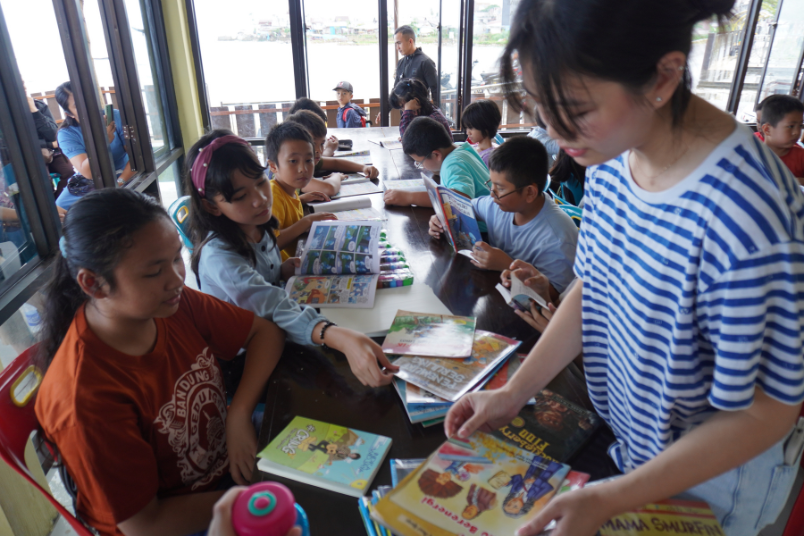
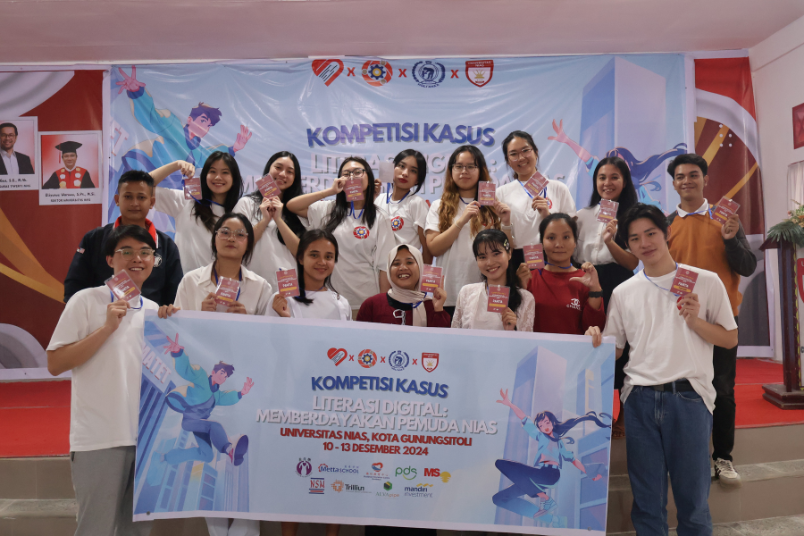
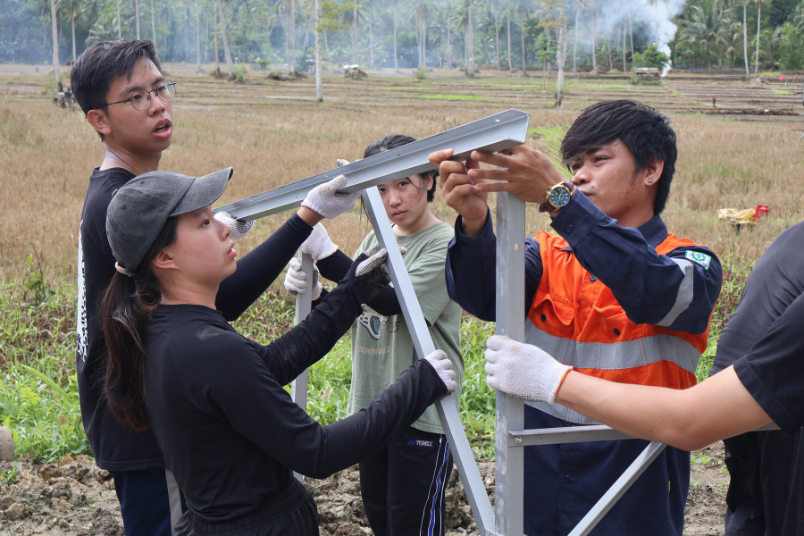
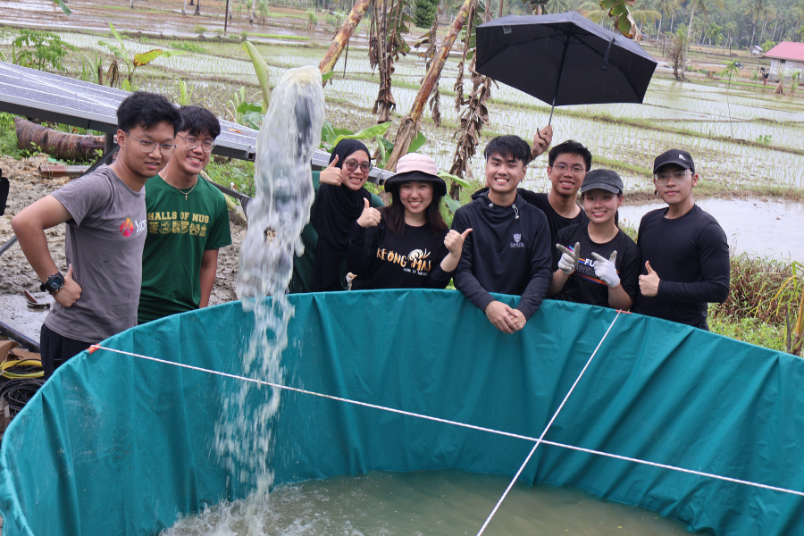
Encouraged by PINUS alumni in 2023, three NUS students Narita Chrysant Lautama (Y4, Mechanical Engineering), Caren Harry Ho (Y4, Business (Accounting), William Arthur Mantofa (Y3, Business) took up the challenge to revive MKP after a Covid hiatus and led the project as Co-Project Directors. The 21-member NUS team brought MKP to Nias, and focused on Technology and Education. Planning ran throughout 2024, and in Decemeber, they executed their vision: they installed a solar-powered irrigation system for local farmers, enhanced literacy resources in a children’s library, and organised a digital literacy case competition for university students.
All these were made possible through collaborations with Indonesia partners, such as Yayasan Holi’ana’a and Yayasan Harapan Dalam Halaman, the University of Nias, and the respective government departments in education, agriculture, and library and archives. The project also received support from the Embassy of Indonesia in Singapore, and individual donors.
OSA connected with the people behind MKP to discuss their inspirations and future plans.
OSA: Congratulations on receiving the NAA Merit Award in Community Service! What does this mean for your team?
MKP: We were incredibly grateful to have MKP recognised at the NAA. Seeing months of hard work and late nights acknowledged reminded us that every effort, no matter how small, can make a difference. It showed us that student initiatives like ours truly matter, and it motivated us to keep contributing and creating impact beyond the classroom.
OSA: What inspired your team to revive MKP after the four-year hiatus?
MKP: The motivation came from a shared desire to give back to our community using the knowledge and experiences we gained at NUS. When NUS alumni encouraged PINUS to revive the programme, we felt inspired to continue their legacy and bring the spirit of service back to life. From there, many like-minded students came together to make the revival possible.
OSA: How did you get started on the project?
MKP: We structured MKP into four teams — Technology, Education, Public Relations, and Publications — each led by a student director. Roles were assigned based on members’ strengths and academic backgrounds.
Engineering students focused on irrigation design, while business students took the lead on sponsorship outreach. Beyond assigning members based on their academic backgrounds, we also placed those with relevant skill sets, such as editing and design, into the Publications team. Prior experience was equally important: several Education Team members had previously worked on programmes for younger children and children with special needs. This experience helped shape the Literacy and Case Competition initiatives, which were designed to address both literacy gaps and broader awareness and employment challenges in Desa Afia.
OSA: What were some of your proudest moments?
MKP: One of our proudest moments was building relationships — both within the team and with the community in Nias. Working under tight timelines and unfamiliar conditions were difficult at first, but these challenges strengthened trust among us.
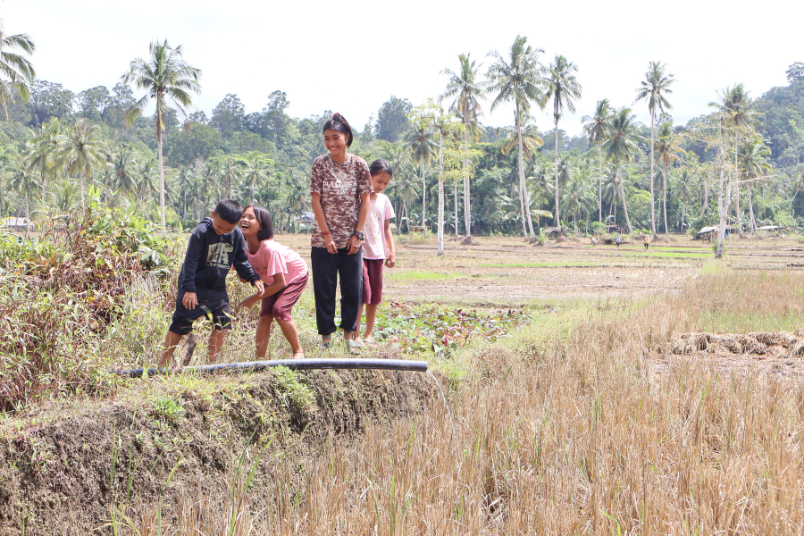
Seeing the smiles and sense of ownership from the community after the project was completed was especially meaningful. Farmers were grateful that the solar-powered irrigation system helped eased their workload and provided more stable water flow. Children proudly showed us the puppets they made during storytelling sessions.
The encouraging responses from the community reminded us that beyond technical outcomes, what we created were genuine human connections.
OSA: What challenges came about in the process of the project, and how did you overcome them?
MKP: A major challenge arose when village farmers suggested relocating the irrigation facility to a site closer to their homes so it would be easier to monitor and safeguard. While the idea made sense, our team had never visited the new site and could not assess the land conditions directly.
Due to time and budget constraints, returning to Nias was not feasible. Instead, we held multiple virtual meetings with NGO partners, vendors, and villagers. We relied on trusted local professionals to examine the site and report potential issues.
Through close collaboration and open discussions, we revised the original design, adapted the plans to the new location, and successfully completed the installation.
OSA: What are future plans for MKP?
MKP: Looking ahead, MKP is not limited to Nias. We hope to support other villages across Indonesia, including locations visited by earlier teams. At the same time, we will remain in close contact with our local partners to monitor long-term impact and ensure sustainability.
Share:
Contributor
Office of Student Affairs