
In January 2021, Teach Singapore (Teach SG) began as a small pilot with a mission to mobilise NUS mentors to support children and youth from disadvantaged backgrounds. Five years on, Teach SG has evolved into something larger than academic coaching. It is a service-learning ecosystem that links NUS, schools, and community partners to make mentoring sustainable and impactful for mentees and mentors alike.
With the theme, “From Pilot to Impact”, anchors the Teach SG 5th Anniversary Showcase held on 8 April 2026 at the NUS Education Resource Centre, where Teach SG partners and supporters take stock of what five years of sustained mentoring can look like when relationships, training, and community infrastructure hold steady.
How mentoring looks like
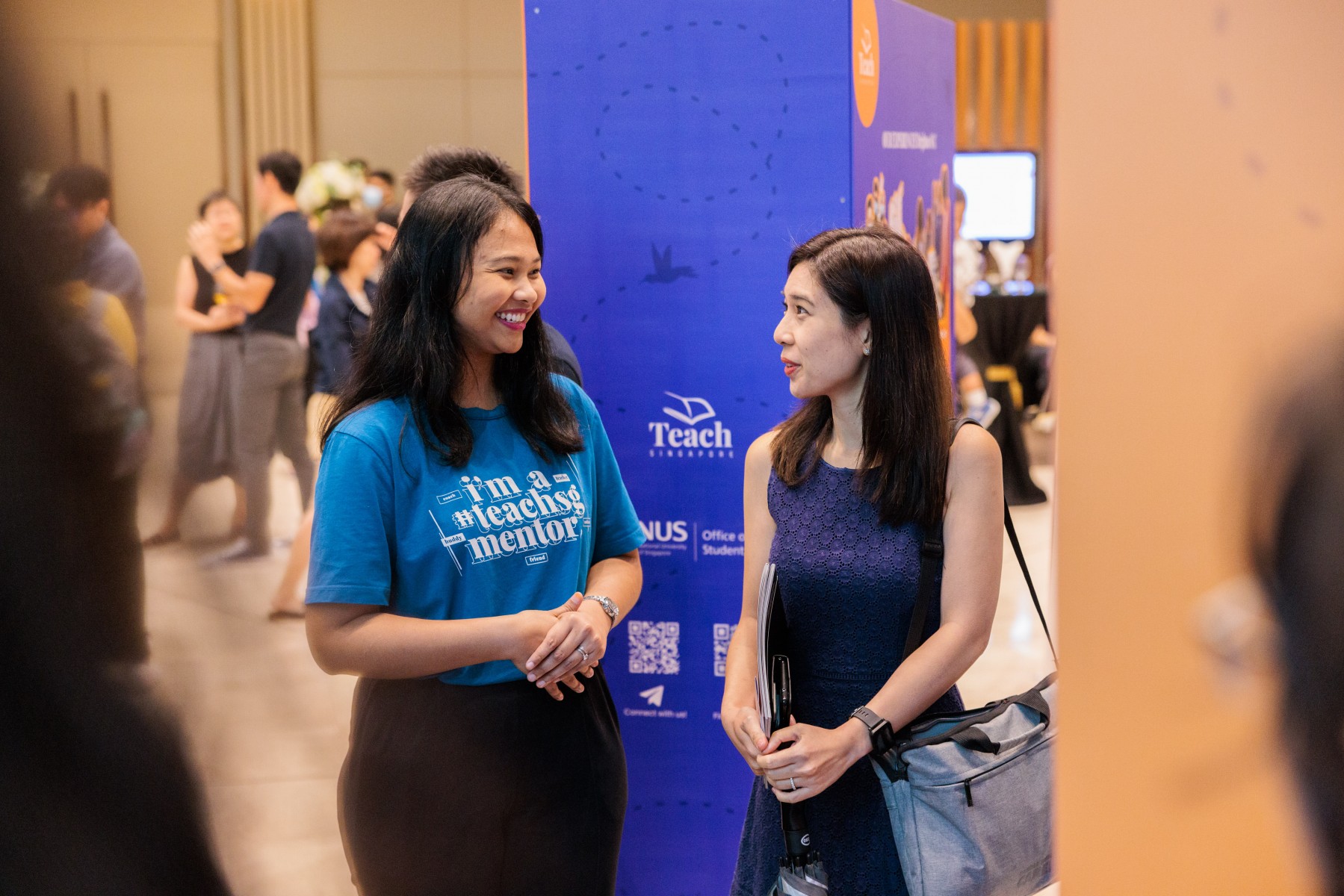
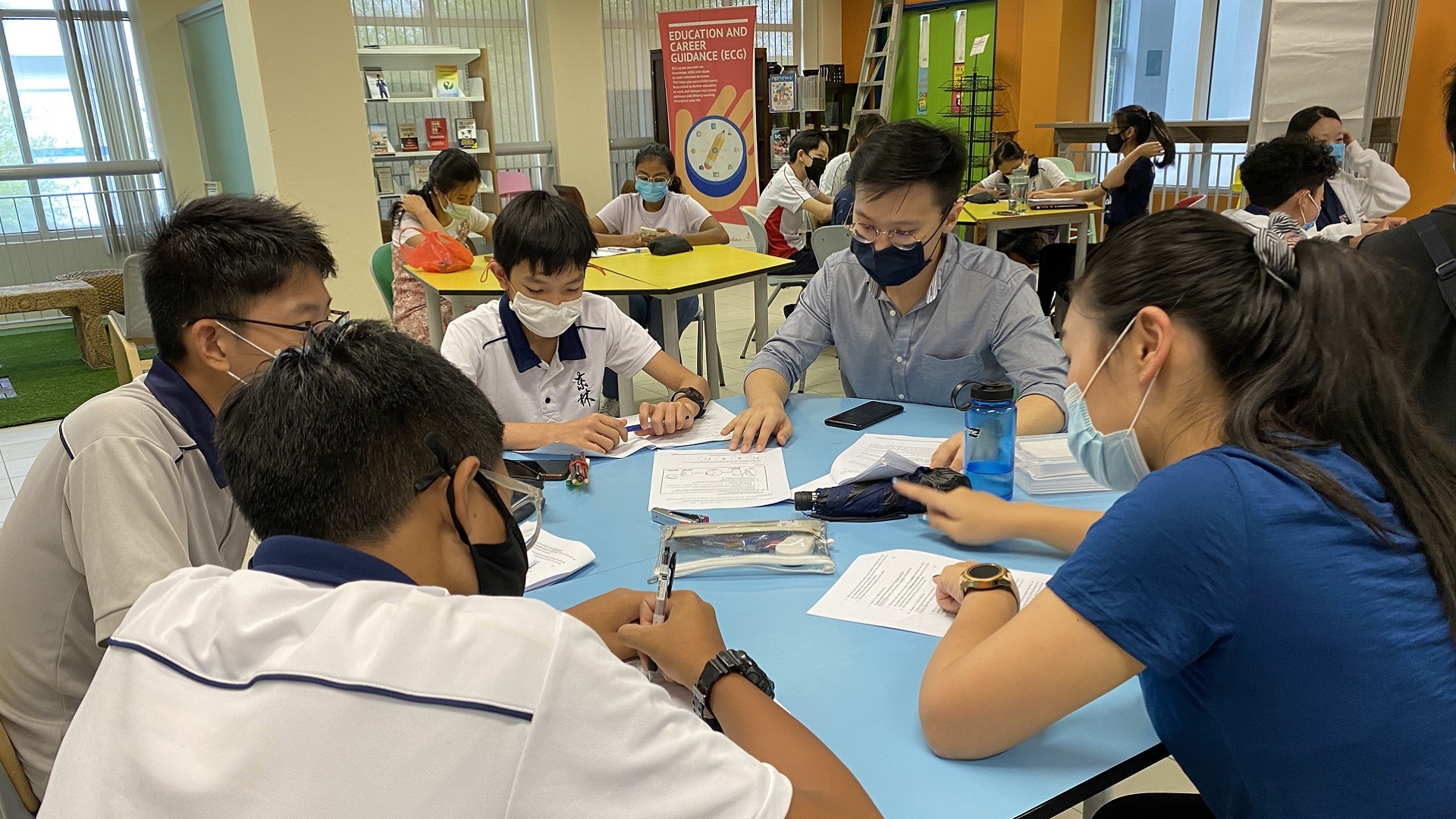
Teach SG is an NUS initiative that aims to promote social mobility and inclusiveness by giving children and youth from disadvantaged families access to consistent mentoring and positive role models. Beyond academic coaching, the programme emphasises holistic growth such as life skills, exposure activities, and supportive relationships that can strengthen confidence and broaden worldview.
Importantly, Teach SG mentors are not simply activated with good intentions. They are equipped with planning frameworks, activity resources, and guidance on how to structure mentoring sessions and learning journeys.
This combination of social mission plus deliberate scaffolding sets the stage for the stories that follow: how a pilot became a platform, and how individual mentors and partners turned continuity into outcomes.
A pilot built on “shared experience”
For Elvyn Sim, a former Teach SG staff mentor and coordinator who supported the programme’s early setup, the spirit of Teach SG is less about any single institution and more about alignment across many.
He describes the programme as a collective commitment with “everyone coming together to support our youth”. He reiterates the idea of a shared experience that binds donors, schools, mentors, and partners into one ecosystem of support.
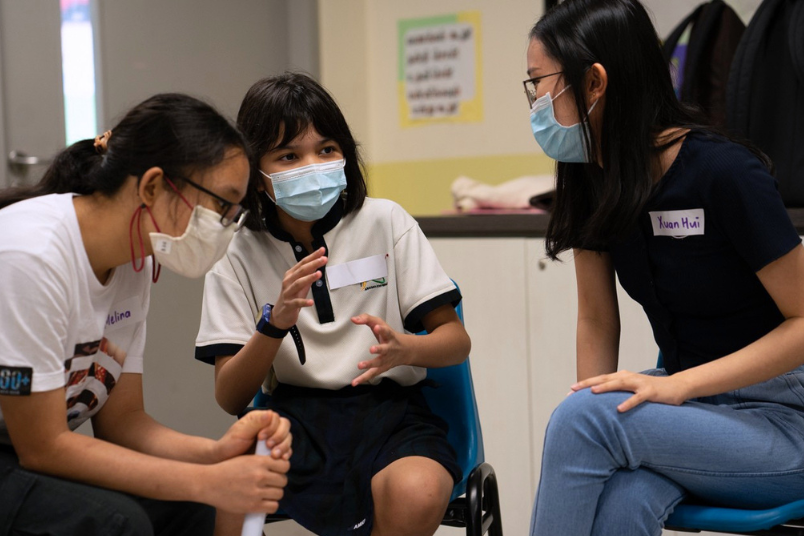
It is a telling definition because it shifts attention away from the most visible element of the programme: the weekly sessions, and towards what makes those sessions possible. It is the work of mentor guidance, programme design and community partnership building.
Elvyn’s earlier teaching career also shaped how he thinks about impact. He recalls students not as a uniform group, but as “authentic”; “the quiet ones, boisterous ones, and those carrying complexities from home into school life.” That memory matters because Teach SG is not designed for an imagined child; it is designed for real children navigating life circumstances.
He also highlights an enduring need that goes beyond academics: students need confidence and encouragement. He encourages mentors to speak to students’ “inner voice”—the one that helps them persevere when things don’t go their way. In practice, this becomes a mentoring philosophy: showing up consistently so students can borrow that belief until they develop it within themselves.
In the early days of Teach Singapore: What inspired NUS students to become mentors and organise programmes under the Teach SG programme? Watch to find out.
Scale arrives but the programme keeps its human centre
Teach SG’s growth took a visible leap in April 2022, when the programme was officially launched with public attention and philanthropic support.
A $10 million donation would expand tutoring and mentorship support to more than 1,200 primary and secondary students from low-income families, with more than 700 NUS student mentors working with community partners.
16 Apr 2022: NUS launches Teach Singapore with S$10 million gift from Ho Bee Foundation.
Teach SG’s challenge, then, was not merely expansion – it was preserving the qualities that make mentorship effective: rapport, reflection, and continuity.
The mentor’s reality summed it up well, “It was more chaotic than I thought”, recalled Collin Chu, a Year 4 Yong Loo Lin School of Medicine student. Collin joined Teach SG as a mentor in 2022. He entered with a common first impression: mentoring would be linear – plan a curriculum, cover Topic A to C, and progress.
Then the sessions began.
Collin explains that mentoring was far less predictable than he expected. He said: “Different mentees learned differently, and the same approach did not work twice.” He found himself constantly adjusting by using more visual explanations, switching to hands-on learning, and experimenting with game-based engagement.
What kept him returning “cycle after cycle” was not a sense of obligation, but evidence of change when a mentee started solving questions independently, or asked for more practice because they wanted to improve.
His reflection is an important one: mentorship impact is often incremental, cumulative, and only visible over time.
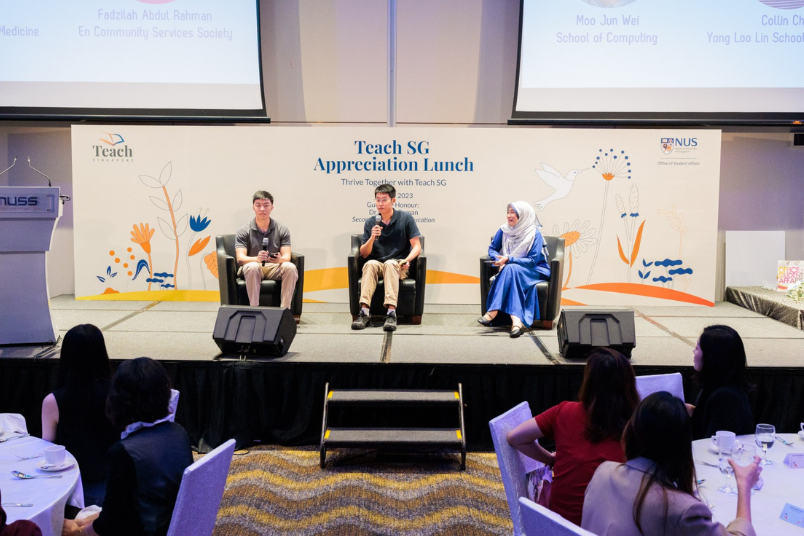
When academic mentoring becomes holistic care
Collin’s mentoring experience did not confine to academics. He noticed that some mentees were sleepy or struggling to focus, and that parents raised concerns about screen time and stress. Over time, he began to treat wellbeing not as a separate topic but as something that shapes learning capacity.
That insight sparked Health Empowerment for Youth (HEY), a community health initiative he started around his third Teach SG cycle. He said: “mentoring revealed that lifestyle habits – sleep, phone use, diet, exercise – can determine whether a child is ready to learn, and mentors can sometimes play a small but meaningful role in nudging families towards healthier routines.”
HEY illustrates a broader point about Teach SG’s “pilot to impact” journey: when mentors are supported, they sometimes build new forms of impact beyond the original programme scope, and without abandoning the core mission.
Service-learning as a mindset shift, not just a structure
Teach SG is not only a Co-Curricular volunteering pathway, it is also integrated into service-learning through GEN2050 Teach SG, led by course tutors who manage both academic and operational dimensions.
Raiza Rifaaie, GEN2050 course lead, describes the early phase in 2022 as “iterative which balances student learning objectives with community partner needs, while keeping the beneficiary [the mentee] at the centre.”
She calls for a mindset shift: students moving from “volunteering as hard work” to “mentoring as learning.” She sees the strongest growth when students become self-aware enough to question their assumptions about mentees, about their life circumstances, and even about what “helping” should look like. Her view aligns with Teach SG’s wider approach of equipping mentors from planning tools, activity guides, to structured preparation so that service becomes deliberate rather than improvised.
Raiza sees Teach SG’s transformation this way – when service work becomes transformative and when empathy and kindness show up in everyday interactions, and not just in programme outcomes.
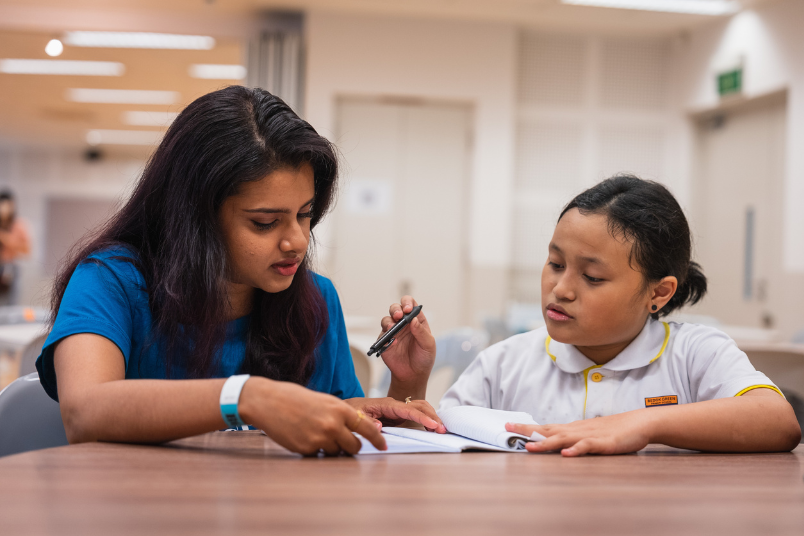
Community partnership: Why continuity is not a “nice-to-have”
Teach SG’s impact is inseparable from its community partners. Among the long-time partners is FaithActs Volunteer Centre, where Ivan Low manages volunteer matching and support in Queenstown.
In the social service sector, volunteer turnover is high, and sustained partnerships are rare. Ivan commends Teach SG as “it returns year-after-year, making continuity its differentiator.”
That continuity creates operational stability and partners learn each other’s strengths and constraints but it also creates relational value for mentees. Ivan notes that for children, familiar faces help build rapport, and rapport supports social-emotional development, not only grades.
This is the “pilot to impact” story at ground level: not merely recruiting more volunteers, but building relationships that last long enough to matter.
Teach SG community partners gave their perspectives on strengthening student support through school–community partnerships and coordinated mentoring efforts.
Mentoring beyond academics: “Teach SG is growth”
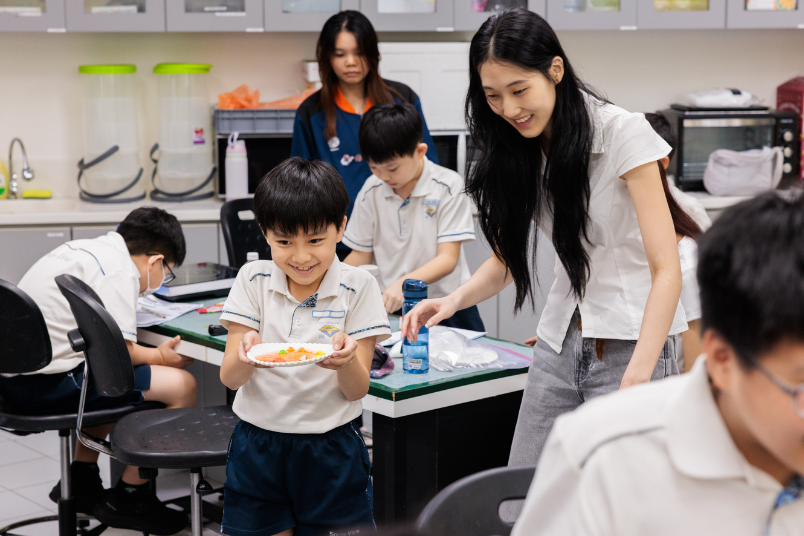
For Vathsalaa B, a Postgraduate Medicine student, Teach SG was a chance to mentor beyond pure academic instruction. Compared with her prior tutoring experiences, she found Teach SG allowed more creativity by mixing academic guidance with activities and lived experience sharing.
Her first session left a strong impression on her. She recalls a 12-year-old mentee from Paya Lebar Methodist Girls’ School (Primary) approaching her with specific mental health questions related to personal challenges. Vathsalaa was struck by the mentee’s curiosity and sense of ownership, and she took the opportunity to listen carefully and offer guidance, an exchange that felt meaningful for both of them.
Vathsalaa emphasises the behind-the-scenes work from planning sessions with her fellow mentors, designing activities the mentees could remember, to ensuring the sessions felt different from an “ordinary class.”
When asked to summarise Teach SG in one sentence, she lands on a single word: growth — for mentees, but also for mentors learning to step outside comfort zones and build real relational skills.
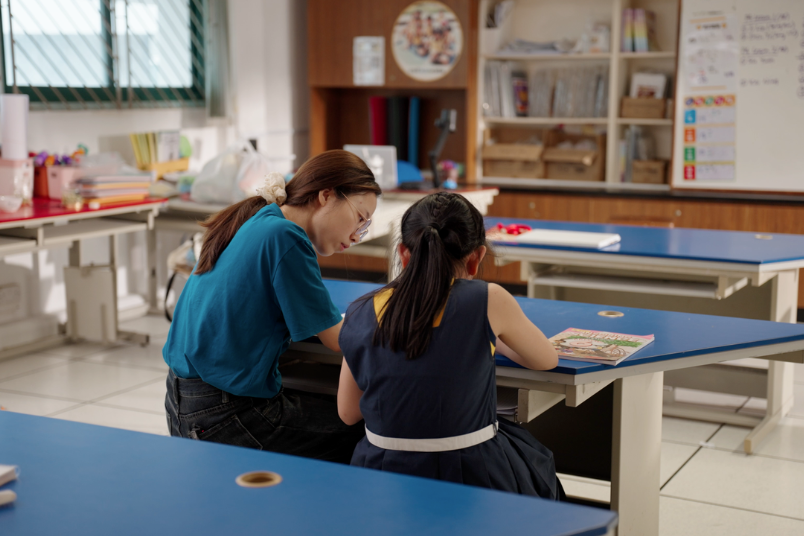
Measuring impact without losing sight
Teach SG’s success is not only anecdotal. By end of 2025, Teach SG had mobilised close to 4,000 NUS student volunteers mentoring nearly 9,000 children and youth beneficiaries, working with 120 community partners including MOE-linked initiatives and social service agencies.
Numbers matter, but these individual stories help us see how teaching and mentoring create impact far beyond a single classroom, rippling into wider community initiatives. Mentoring also encourages reflection and continuous improvement, and mentors themselves grow — gaining perspective, empathy, and leadership — often discovering that giving is never just one-way.
Equally important is continuity, often the engine that sustains trust between mentors and mentees and makes progress possible.
While the most meaningful impact may be deeply personal: mentorship can become a moment of care that a child remembers, reinforcing both learning and wellbeing.
Five years on: from pilot to impact, and impact to responsibility
Teach SG is not a short-term intervention. It is a sustained, multi-stakeholder commitment to uplift children and youth through the steady work of mentoring, and the quieter work of building a system that lets mentoring succeed.
Watch Teach SG 5th anniversary video, From pilot to impact, a commemorative story marking this milestone in 2026
Share:
Contributor
Office of Student Affairs