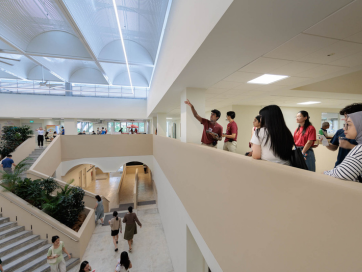

Launched in 2022, the NUS Public Art Initiative aims to cultivate a distinct campus identity and sense of community through site-specific works that engage with their surroundings, fostering student and community engagement, promoting interdisciplinary collaborations for learning and teaching, and enhancing the campus through public art.
Committed to promoting intellectual and cultural life within and beyond NUS, NUS Museum provides curatorial advice for public arts commissions to NUS departments and connects creatives through the Initiative’s public programmes
Collaborating on a new woodcut mural
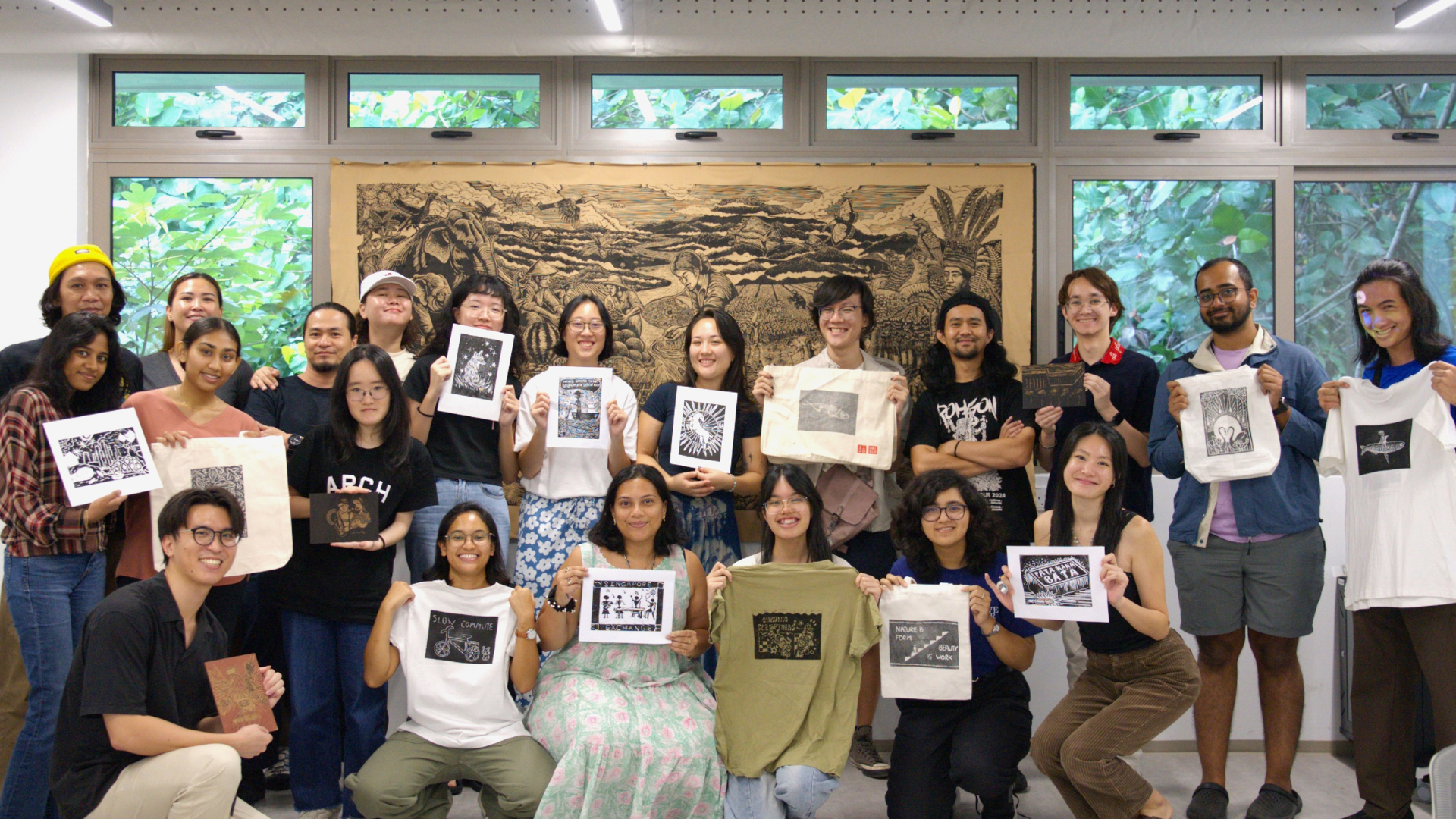
Late last month, NUS Museum and NUS Office of Student Affairs jointly hosted a mural workshop at NUS’ Yusof Ishak House (YIH), the newly reopened epicentre of student life. Participants collaborated with Malaysia-based artist collective Pangrok Sulap to design a woodcut mural for a wall at YIH, which will be part of a series of Public Art installations at the venue.
This is not Pangrok Sulap’s first collaboration with NUS. In 2024, they conducted a woodblock printing workshop for students in the NUS College Impact Experience-linked course NHS2063 Indigeneity and the Politics of Representation in Sabah. The workshop explored woodblock printing for social commentary, connecting with the course’s study of the Bajau Laut, widely known as indigenous sea nomads in Sabah, and themes of indigeneity and representation.
The four-day workshop focused on community art as a collaborative process. Central to Pangrok Sulap’s approach was community participation, involving conversations with both migrant workers and the students. During the first two days, the students developed practice designs for woodcut carving and printing, and shared their experiences.
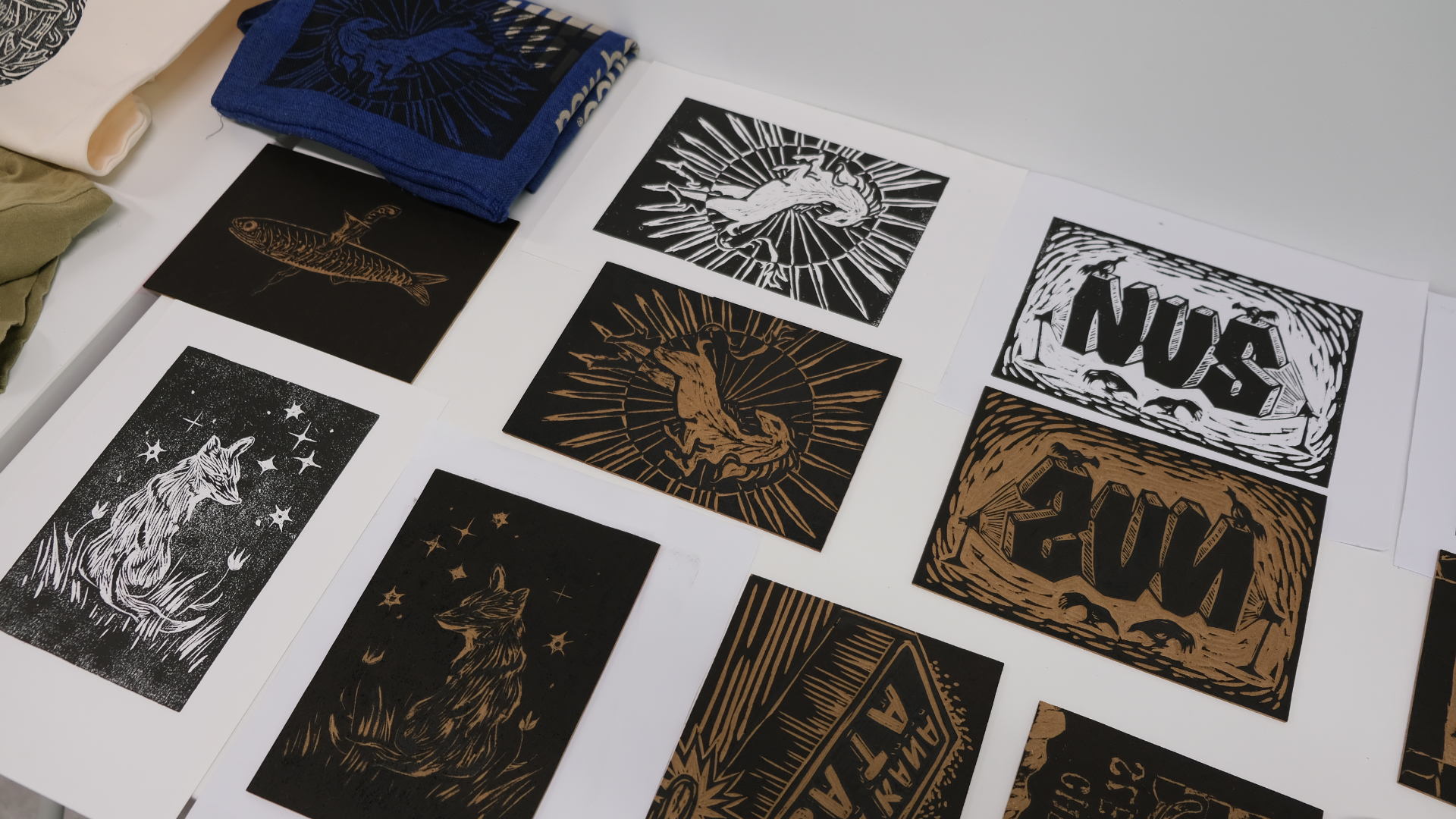
In addition to learning carving techniques, the students developed mural elements centred on three themes – Arts, Community & Leadership, and Sports. Through active discussions, the students brainstormed their personal interpretations of these themes. For instance, “Community & Leadership” inspired some students to think about the wildlife around campus, such as chickens and otters, which they then etched into their designs.
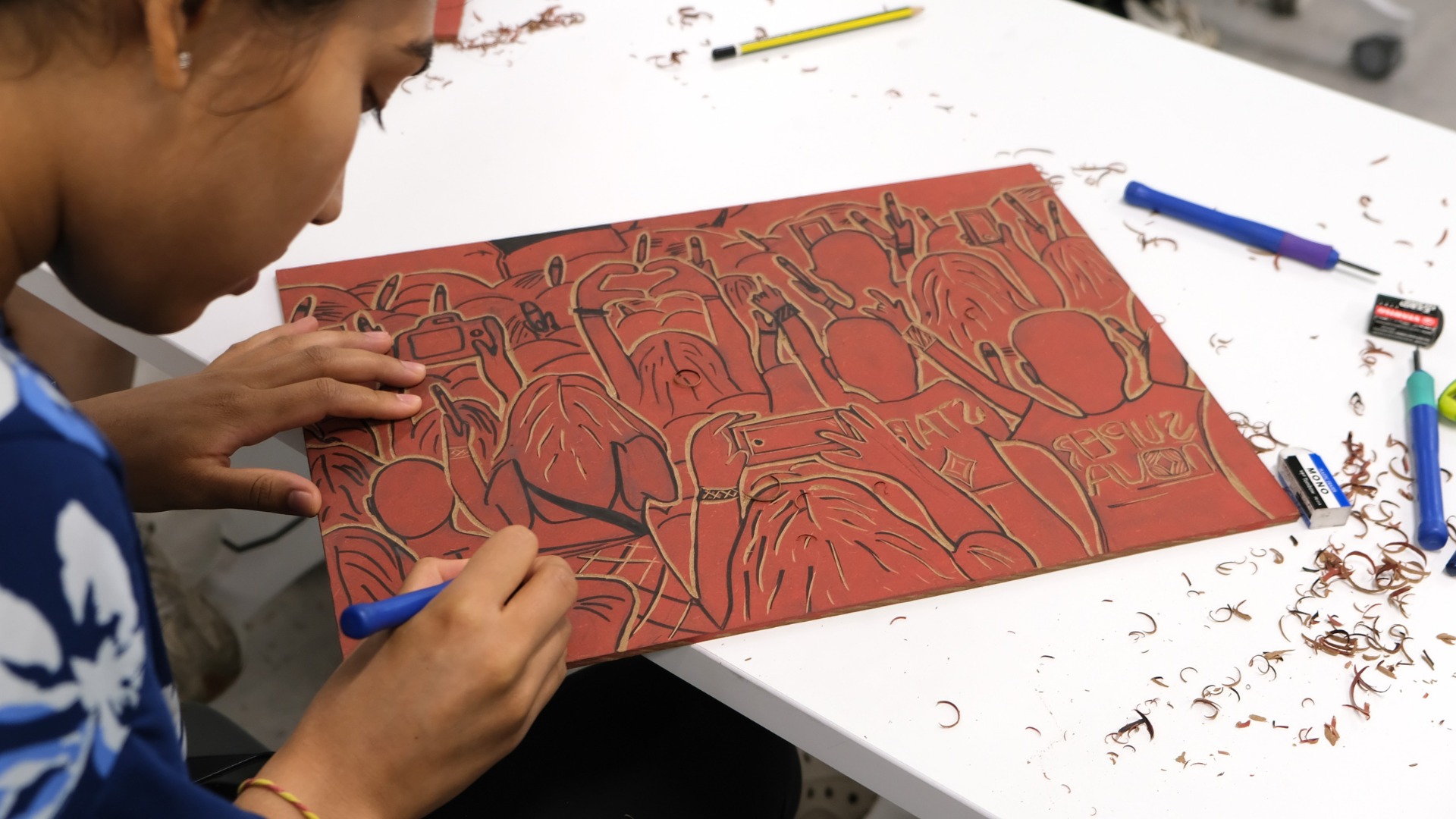
At the end of the workshop, the collective transported the students’ carved elements to Sabah, where they will be seamlessly integrated into the final mural artwork. Second-year NUS Business School student and Performing & Visual Arts scholar Mabel Tan said, “The approach the collective took for the mural was interesting. They had a focus on storytelling and were very open to what we had to say. This created an inclusive, judgment-free and engaging environment, where we got to experiment with the medium itself and have fun.”
Making space and time for art
NUS Museum also conducts community-led public art tours to enhance understanding of campus artworks. The recent Basking in Slowness tour, led by NUS Museum’s student intern Aida Nadirah, a final-year NUS student from the College of Humanities and Sciences, invited NUS students, staff and alumni to explore public art through the lens of “slowness”. Applying this lens, the tour examined how public art works function in everyday spaces, distinct from gallery pieces, encouraging participants to observe details and reflect on learning, memory, and belonging within NUS.
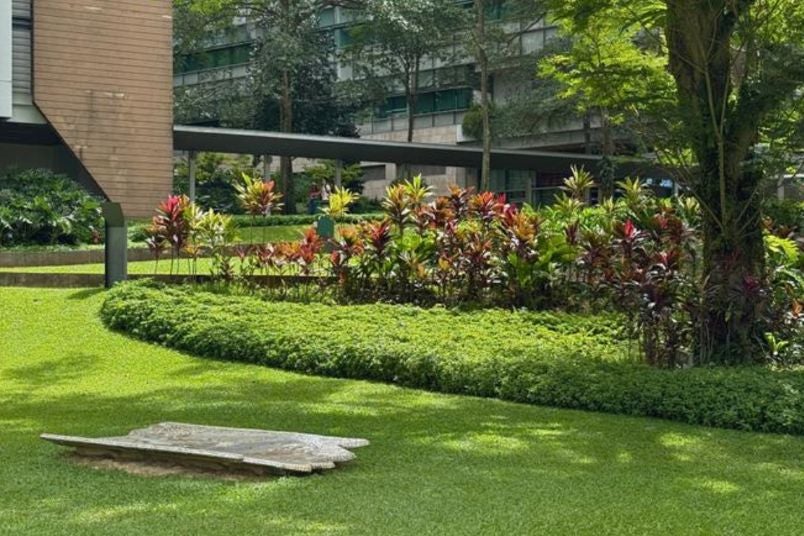
Some of the artworks featured in the tour include the iconic I WAS HERE (2004) by Francis Ng, displayed prominently in front of the University Cultural Centre, and Picnic in a Garden (2006) by Delia Prvački at University Town Green, which invites viewers to picnic and consider their relationship with nature within an urbanised environment.
As NUS celebrates its 120th anniversary and beyond, the NUS Public Art Initiative continues to deepen the community’s engagement with public art through Public Art Internships for students, interdisciplinary collaborations between artists and academics, and the maintenance and care of the public art on campus.
For upcoming runs of the public art tours, please refer to this link.
Share:
Contributor
This story was first published on NUS News