

Resources and Guides
Explore resources that deepen your understanding of the diverse experiences of different individuals within our community, and discover inclusive practices that promote equitable access to learning for everyone.

Mobility Support
The need for mobility support can be permanent, intermittent, or temporary and can be caused by various factors.
People may experience different mobility challenges, such as limited range of motion, balance and coordination difficulties, or pain. Click below to learn about the different types of mobility needs, the barriers to accessibility and the inclusive practices for providing mobility support.
Hearing and Vision Support
Some students may require different levels of sensory support for their hearing and vision, and some needs may not be immediately apparent. It is important not to make assumptions and remain respectful.
Click below for more information on the barriers to accessibility and inclusive practices.


Self-Regulation Support
Self-regulation refers to the ability to control one’s emotions, thoughts, and behaviours. It involves managing impulses and ensuring thoughtful consideration before acting. Self-regulation is one of the five key components of emotional intelligence.
There are three types of self-regulation described in the page below: emotional regulation, cognitive regulation, and sensory regulation.
Building Inclusive Experiences
(Page under development)
Building inclusive experiences refers to the intentional design of learning environments that enable all students to participate fully and equitably.
Look forward to a page that outlines key models and types of disability, explores inclusive language and safe space practices, and introduces practical strategies such as inclusive syllabus statements and Universal Design of Learning principles.

Road to Accessibility Resource Guide
Road to Accessibility is a resource guide developed by the Student Accessibility Unit (SAU) to support the NUS community in building inclusive and accessible learning environments. The guide provides practical, evidence-informed strategies for addressing diverse accessibility needs and reducing barriers to participation in higher education.
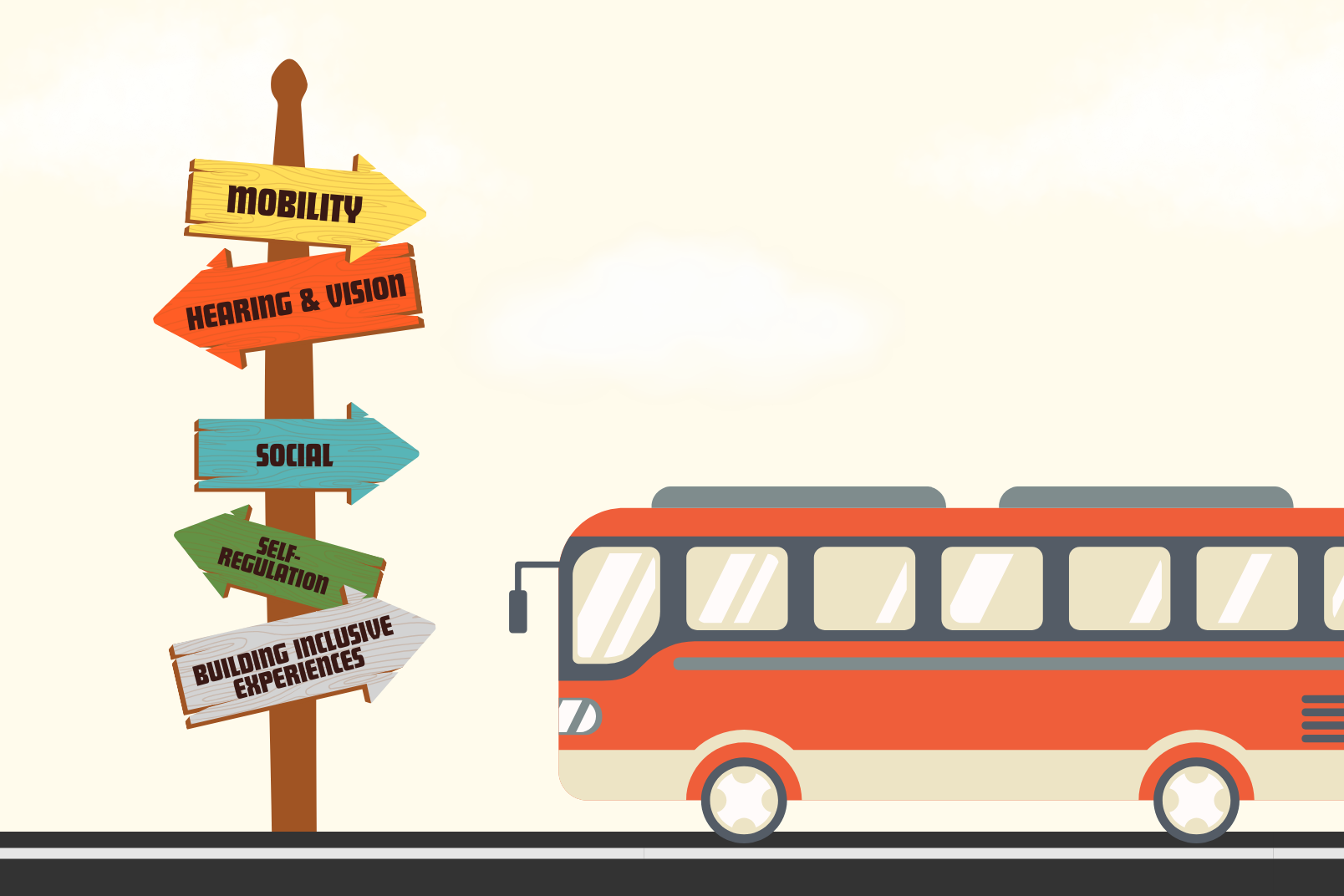
The resource is organised around key domains: mobility support, hearing and vision support, self-regulation support and strategies to build inclusive experiences.
Inclusive Classrooms - A Case Scenario Guide
Inclusive Classrooms – A Case Scenario Guide is an e-guide developed by a Teaching Enhancement Grants (TEG) Learning Community made up of faculty members, student support managers, students, and the Student Accessibility Unit. The guide contains practical, scenario-based strategies for supporting diverse learners and fostering an inclusive learning environment.
The resource is organised around four themes—neurodiversity, anxiety and stress management, group dynamics, and workplace readiness—and includes illustrative cases, recommended approaches, expert comments, and reflection prompts to support day-to-day teaching and facilitation.