

Mobility Support
The need for mobility support can be permanent, intermittent, or temporary and can be caused by various factors.
People may experience different mobility challenges, such as limited range of movement, difficulties with balance and coordination, or pain. See below for the different types of mobility needs, the barriers to accessibility and the inclusive practices for providing mobility support.
1. Types of Motor Needs
Gross Motor Needs
- Gross motor skills are the movements we make with large muscles, such as in our arms, legs and torso.
- Some examples:
- Standing
- Running
- Bending over
- Sitting upright without back support
- Jumping
- Raising arms and legs
- Related to other functions such as balance, motor coordination, and spatial awareness
- Can be due to various conditions: Autism Spectrum Disorder, Cerebral Palsy, spine injuries, brain injuries, stroke
Fine Motor Needs
- Fine motor skills are the movements that require the use of small and precise muscles, typically from our wrists, fingers, and hands
- Some examples:
- Holding a pencil to write or draw
- Using scissors
- Typing on a keyboard
- Fastening a button
- Eating with utensils
- Texting
- Invisible mobility needs
- There may be some individuals who have mobility needs that are not immediately apparent.
- For example: A person who has a spine injury may be ambulant without assistive devices but experiences pain when moving or sitting
- There may be some individuals who have mobility needs that are not immediately apparent.
2. Barriers to Accessibility
Inaccessible classroom locations
- Getting to the location:
- Lecture halls or classrooms on campus might be in buildings that lack accessible routes, making it difficult for students to reach them independently.
- At the location:
- Lecture theatres or classrooms themselves may have physical barriers that make it hard for students with mobility needs to get through, such as:
- Fixed furniture obstructs pathways and limits space for wheelchair users to turn and manoeuvre.
- Stairs or uneven road surfaces
- Push doors that are heavy or have difficult mechanisms
- For example: doorknobs requiring firm grasp by fingers
- Lecture theatres or classrooms themselves may have physical barriers that make it hard for students with mobility needs to get through, such as:
Inaccessible course content
- Course content not available in alternative formats can be challenging for students with mobility needs.
- Course content or software not compatible with assistive devices (e.g. screen readers or speech-to-text software) would make it challenging for students who require such devices to engage with the content.
- Hardcopy materials, such as physical textbooks, might be difficult for some students.
- Websites or documents with complex navigation structures will be challenging for students using assistive technologies.
Discomfort faced by students not apparent
- Students with mobility challenges may experience discomfort or pain that is not immediately noticeable. As a result, their needs might be overlooked or dismissed by others.
- This can lead to a lack of appropriate accommodations and support, hindering their ability to fully engage in learning.
- Students who have been dismissed when expressing their needs may be reluctant to seek help, when necessary, in the future.
Lack of alternative assessment arrangements
- Assessment methods for courses may not be accessible to students with mobility needs. This can include:
- Assessments conducted in locations that are not wheelchair-accessible
- Requiring students to perform motor actions that they are unable to do (such as typing)
- Assessments that are incompatible with assistive technologies like speech-to-text software or screen readers.
- When assessments are not accessible, they hinder students from showcasing their true knowledge and abilities. This can result in unfair evaluations of students' understanding of the material
- An inflexible environment can negatively affect students' academic progress and their emotional well-being, leading to decreased motivation and increased anxiety during examinations.
3. Inclusive Practices and Strategies
Do not assume; seek to understand
- Each student has unique mobility needs and personal preferences regarding how they interact with their environment.
- Engaging in open and respectful conversations is essential in understanding the accommodations or arrangements that may be required or preferred.
- For example, it's important to ask before offering assistance.
- Observing how students navigate their environment and listening to their feedback can provide valuable insights into potential barriers and ways to address them.
Validate and respect
- Respect students' privacy and maintain the confidentiality of their conditions. When speaking with students, allow them to share only what they are comfortable disclosing.
- Respect students' autonomy in making choices about their accommodations and preferences.
- Acknowledge students' challenges, regardless of visibility and practice active listening
Ensuring a barrier-free learning environment
- What is an accessible environment?
- An accessible physical environment is free of barriers, allowing individuals to navigate the space independently and freely.
- Ensure that classes are held in classrooms or lecture theatres that are accessible via accessible routes. Entrances, exits, and emergency pathways should remain free of obstacles.
- Maintain clear, unobstructed pathways within the classroom, providing ample space for wheelchair movement.
- Provide adjustable-height furniture, such as desks and tables.
- Ensure that items students need access to, like paper submission boxes, are placed at an appropriate height.
Communicate changes in advance
- To ensure students have adequate time to plan for accessibility or coordinate transport, changes in location or time of class can be communicated in advance as much as possible.
Allowing flexibility in learning whenever possible
- Flexible seating arrangements
- Students can be allowed to choose their seating arrangements based on their comfort and needs.
- A specific seating area can be designated for them if they feel comfortable.
- Flexible course content
- It will be helpful to provide course materials in multiple formats, such as digital text, audio, or large print, to accommodate various needs.
- Facilitate flexible content delivery by providing recorded lectures and allowing students to review materials at their own pace.
- Flexible assessment arrangement
- Provide assignments in various formats, including oral presentations, digital submissions, and written reports, to allow students to demonstrate their knowledge in diverse ways.
- Permit the use of assistive technologies or interpreters during assessments, such as speech-to-text programs, screen readers, or a human scribe to assist with typing or writing for the student.
Road to Accessibility is a guidebook that contains the barriers to accessibility that students often face, as well as inclusive practices on how to support students with different needs. The last section of the guidebook also includes a segment on how to build inclusive experiences for all individuals.
1. Types of Motor Needs
Gross Motor Needs
- Gross motor skills are the movements we make with large muscles, such as in our arms, legs and torso.
- Some examples:
- Standing
- Running
- Bending over
- Sitting upright without back support
- Jumping
- Raising arms and legs
- Related to other functions such as balance, motor coordination, and spatial awareness
- Can be due to various conditions: Autism Spectrum Disorder, Cerebral Palsy, spine injuries, brain injuries, stroke
Fine Motor Needs
- Fine motor skills are the movements that require the use of small and precise muscles, typically from our wrists, fingers, and hands
- Some examples:
- Holding a pencil to write or draw
- Using scissors
- Typing on a keyboard
- Fastening a button
- Eating with utensils
- Texting
- Invisible mobility needs
- There may be some individuals who have mobility needs that are not immediately apparent.
- For example: A person who has a spine injury may be ambulant without assistive devices but experiences pain when moving or sitting
- There may be some individuals who have mobility needs that are not immediately apparent.
2. Barriers to Accessibility
Inaccessible classroom locations
- Getting to the location:
- Lecture halls or classrooms on campus might be in buildings that lack accessible routes, making it difficult for students to reach them independently.
- At the location:
- Lecture theatres or classrooms themselves may have physical barriers that make it hard for students with mobility needs to get through, such as:
- Fixed furniture obstructs pathways and limits space for wheelchair users to turn and manoeuvre.
- Stairs or uneven road surfaces
- Push doors that are heavy or have difficult mechanisms
- For example: doorknobs requiring firm grasp by fingers
- Lecture theatres or classrooms themselves may have physical barriers that make it hard for students with mobility needs to get through, such as:
Inaccessible course content
- Course content not available in alternative formats can be challenging for students with mobility needs.
- Course content or software not compatible with assistive devices (e.g. screen readers or speech-to-text software) would make it challenging for students who require such devices to engage with the content.
- Hardcopy materials, such as physical textbooks, might be difficult for some students.
- Websites or documents with complex navigation structures will be challenging for students using assistive technologies.
Discomfort faced by students not apparent
- Students with mobility challenges may experience discomfort or pain that is not immediately noticeable. As a result, their needs might be overlooked or dismissed by others.
- This can lead to a lack of appropriate accommodations and support, hindering their ability to fully engage in learning.
- Students who have been dismissed when expressing their needs may be reluctant to seek help, when necessary, in the future.
Lack of alternative assessment arrangements
- Assessment methods for courses may not be accessible to students with mobility needs. This can include:
- Assessments conducted in locations that are not wheelchair-accessible
- Requiring students to perform motor actions that they are unable to do (such as typing)
- Assessments that are incompatible with assistive technologies like speech-to-text software or screen readers.
- When assessments are not accessible, they hinder students from showcasing their true knowledge and abilities. This can result in unfair evaluations of students' understanding of the material
- An inflexible environment can negatively affect students' academic progress and their emotional well-being, leading to decreased motivation and increased anxiety during examinations.
3. Inclusive Practices and Strategies
Do not assume; seek to understand
- Each student has unique mobility needs and personal preferences regarding how they interact with their environment.
- Engaging in open and respectful conversations is essential in understanding the accommodations or arrangements that may be required or preferred.
- For example, it's important to ask before offering assistance.
- Observing how students navigate their environment and listening to their feedback can provide valuable insights into potential barriers and ways to address them.
Validate and respect
- Respect students' privacy and maintain the confidentiality of their conditions. When speaking with students, allow them to share only what they are comfortable disclosing.
- Respect students' autonomy in making choices about their accommodations and preferences.
- Acknowledge students' challenges, regardless of visibility and practice active listening
Ensuring a barrier-free learning environment
- What is an accessible environment?
- An accessible physical environment is free of barriers, allowing individuals to navigate the space independently and freely.
- Ensure that classes are held in classrooms or lecture theatres that are accessible via accessible routes. Entrances, exits, and emergency pathways should remain free of obstacles.
- Maintain clear, unobstructed pathways within the classroom, providing ample space for wheelchair movement.
- Provide adjustable-height furniture, such as desks and tables.
- Ensure that items students need access to, like paper submission boxes, are placed at an appropriate height.
Communicate changes in advance
- To ensure students have adequate time to plan for accessibility or coordinate transport, changes in location or time of class can be communicated in advance as much as possible.
Allowing flexibility in learning whenever possible
- Flexible seating arrangements
- Students can be allowed to choose their seating arrangements based on their comfort and needs.
- A specific seating area can be designated for them if they feel comfortable.
- Flexible course content
- It will be helpful to provide course materials in multiple formats, such as digital text, audio, or large print, to accommodate various needs.
- Facilitate flexible content delivery by providing recorded lectures and allowing students to review materials at their own pace.
- Flexible assessment arrangement
- Provide assignments in various formats, including oral presentations, digital submissions, and written reports, to allow students to demonstrate their knowledge in diverse ways.
- Permit the use of assistive technologies or interpreters during assessments, such as speech-to-text programs, screen readers, or a human scribe to assist with typing or writing for the student.
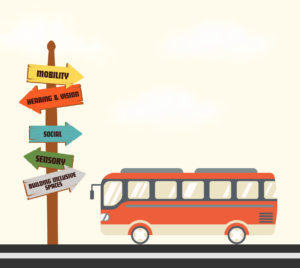
Road to Accessibility is a guidebook that contains the barriers to accessibility that students often face, as well as inclusive practices on how to support students with different needs. The last section of the guidebook also includes a segment on how to build inclusive experiences for all individuals.